How the Water Holds
A 4k swim through salt and tide
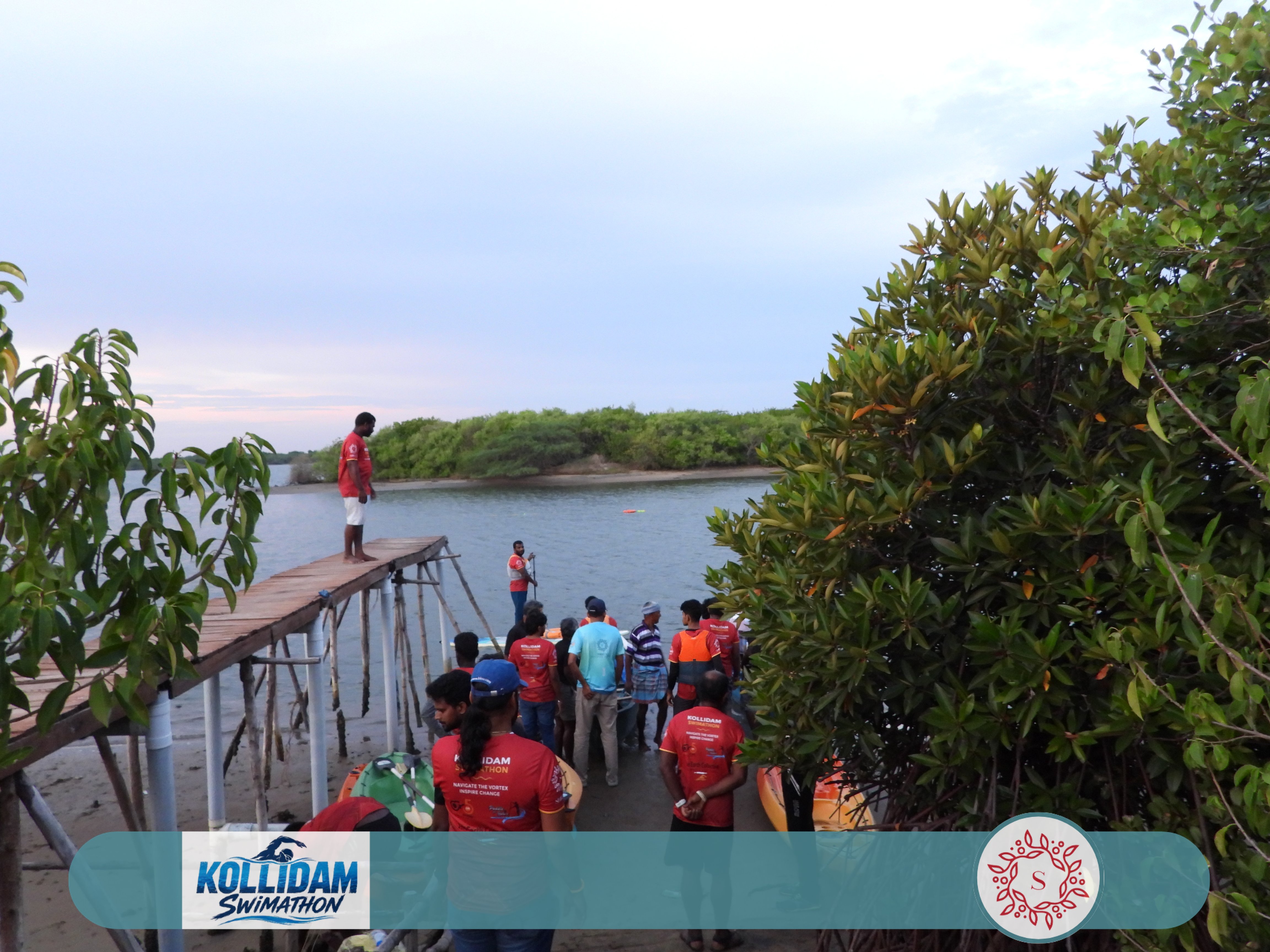
The Kollidam backwaters that morning were the colour of river water that has not quite decided to become sea. Brown and green and grey at once, the surface shifting in patterns I could not read. The air was warm and wet. Other swimmers adjusted caps and goggles, checked tow floats, stood in small groups and laughed the nervous laugh that people laugh before they enter something unfamiliar.
I stood apart, looking at the water, and realised I had never swum in salt water before.
I’d read about it. Greater buoyancy. The sting in open cuts. But reading is not knowing. The knowing starts when you wade in and the water lifts you half a centimetre higher than you expected, a small gift you feel immediately, and the first splash hits your tongue and the ocean reminds you it has been here a lot longer than you have.
This is the first way the water holds, not by grasping but by lifting. You feel it before you can name it.
The start was crowded, a chaos of arms and foam and the particular urgency that comes when everyone wants the same patch of water at the same moment. I found space, settled, and for the first kilometre I thought: this is not so different. The rhythm came. Two strokes, breathe. Two strokes, breathe. The salt held me higher. The rhythm held me steady. The water was darker underneath, and I could not see the bottom, but the body does not need to see the bottom. It only needs to move.
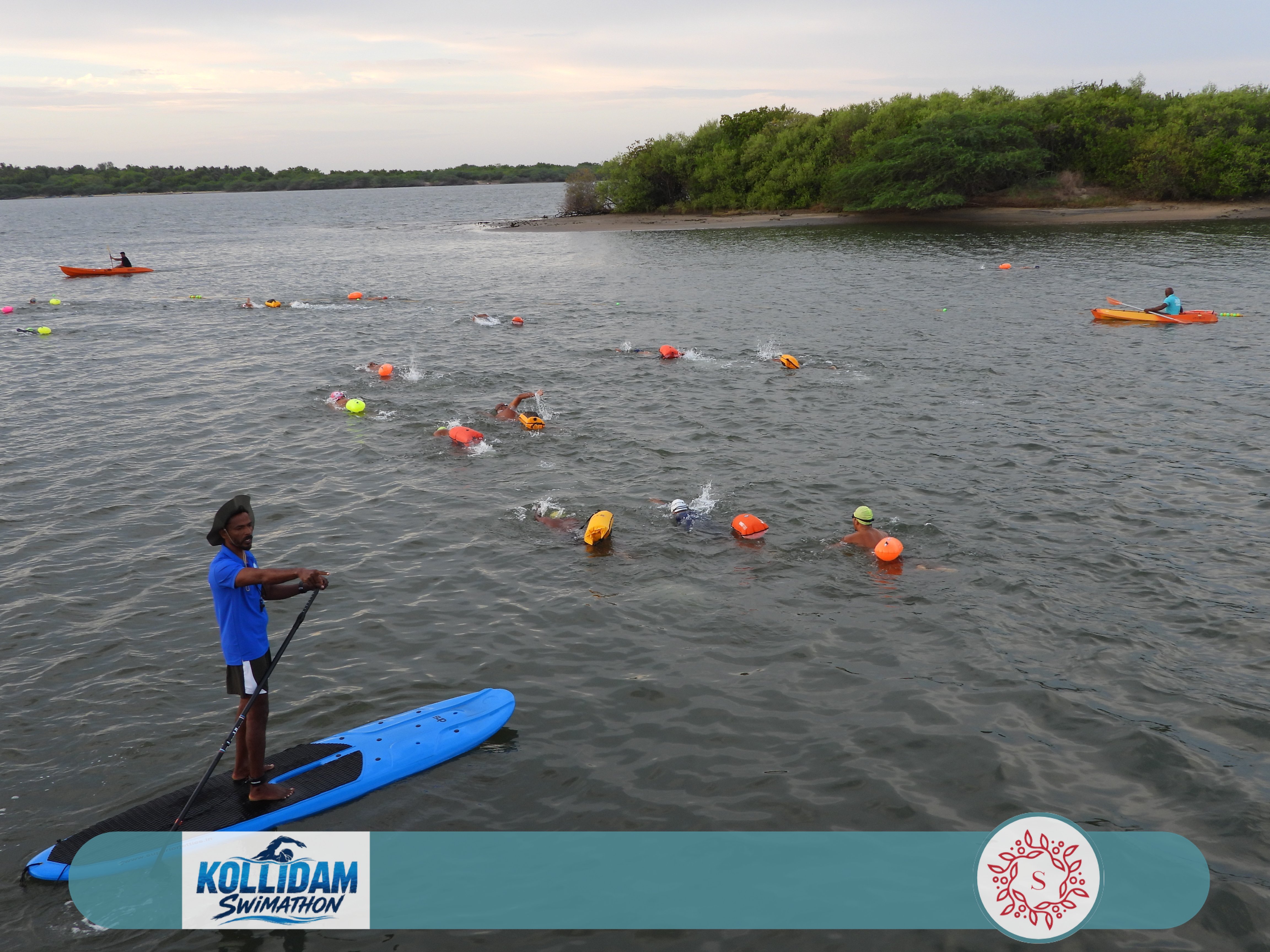
In a pool, the water contains you. The ocean receives you. They feel the same until they do not.
The tide
The change did not announce itself clearly. One minute I was in a rhythm. The next, the rhythm was gone. The tide had turned somewhere offshore, and the long slow pulse of the ocean, which had been carrying me forward, was now pushing back.
Waves arrived. Not big. Nobody in the swim would call them big. But big enough. Big enough to break the cadence. Big enough that every third or fourth breath brought water instead of air. A mouthful, then a cough, then a stroke lost to recovery. Big enough that my arms, which had been moving through a clean arc, now sometimes caught nothing but foam.
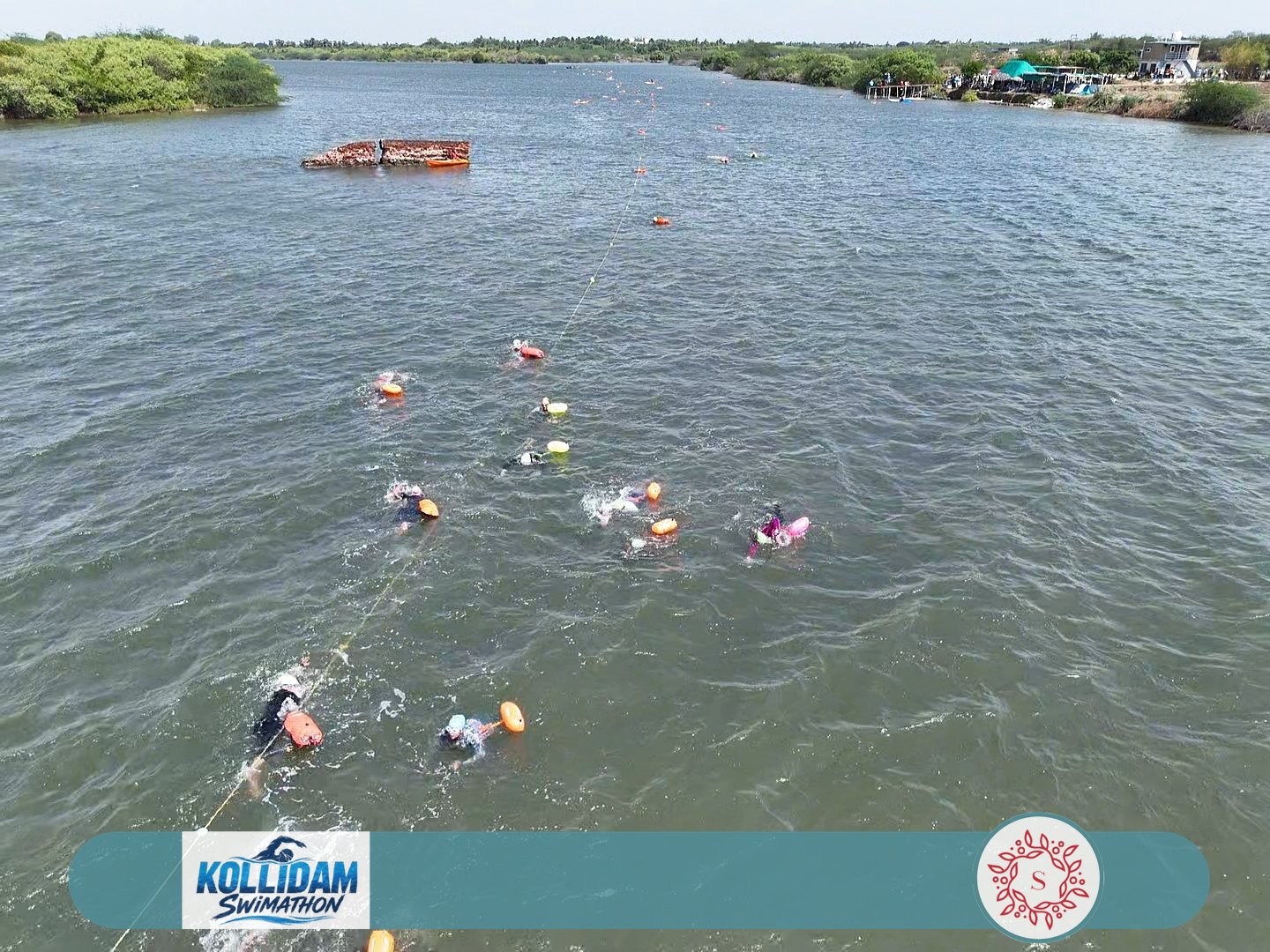
The tow float, tethered to my waist, swung around in the wind and the waves. It hit my arm mid-reach. I pushed it away. It came back. The waves were coming from different directions, a chop from the south-east meeting another from the north-west, and I was somewhere in the middle, pushed and pulled from both sides, trying to swim a straight line through forces that had no interest in straight lines.
I never felt like quiting. But I wanted the rhythm back. I wanted the water to stay still long enough for me to settle. It would not. This was not the pool. In the pool, the water is neutral, a medium you control through technique. Here, the water had intentions of its own. It was not hostile. The ocean does not host. But it was not neutral either. It had a tide. It had a schedule. It did not care about my rhythm.
The rhythm breaking is not a failure. It is the condition you are in. The water does not always cooperate. Neither does life. The healing is not about finding water that stays still. It is about realising you can still move forward, imperfectly, adjusting every few strokes, when nothing will hold still for you.
And I found, somewhere in that disrupted middle stretch, that this was exactly what I needed.
Not the calm water. Not the predictable lap. The disruption, the thing that forced me to stop swimming my swim and start swimming this one, the swim the water was offering instead of the one I had planned. Most of what unhinges us in life is the gap between the story we wrote and the one the world is telling. The water does not let you stay in the gap. It makes you choose, stroke by stroke, which story you will swim.
The water was still holding me, just not the way I wanted it to. The holding I had known, the gentle lift of the salt and the steady rhythm, had been replaced by something that felt like opposition. But opposition is also a kind of holding. It holds you accountable. It holds you to the moment. It does not let you drift.
The negotiation
I stopped fighting and started negotiating. The difference is simple. Fighting means wanting the water to change. Negotiating means accepting it as it is and finding your way through. One wears you out. The other teaches you something.
I adjusted my stroke, shorter on the side the wave was coming from and a half-beat longer on the other. I breathed when I could and held when I could not, and I discovered that missing a breath is not the same as drowning. It just means waiting for the next one. A missed breath in life, a failure or a rejection or a loss, feels final. The water taught me it is not. The next one always comes. You only have to be there for it.
The pool quiets your mind by removing distractions. The ocean does something harder. It teaches you to stay present when everything is pushing back. One gives you calm. The other gives you something more useful: the knowledge that you can be disrupted and still keep moving, that the rhythm can leave and return, that you do not need calm water to swim well. You need the next breath and the willingness to take it.
In the pool, the water demands one thing at a time. The reach, the catch, the rotation, the breath. You cannot think about your meeting and swim well. The open water demands something else. It gives you choices, all of them uncomfortable, and lets you decide. The wave is coming. You can fight it. You can go with it. Or you can find the narrow space between fighting and going where you are actively accepting what is in front of you. That space is where the swimming becomes something else.
I thought about my daughter learning to swim in a pool where the water stays still. She is learning that the water can be trusted because it is predictable. I was learning, in that moment, that the water can be trusted precisely because it is not predictable. Trust and predictability are not the same thing. Trust is what you build when the water has pushed you around and you have found your way through and you know, now, that you can do it again.
The shore
The finish came as a surprise. One moment I was in the water, negotiating with the latest wave. The next, my hand touched sand, a different texture and a different resistance, and I stood up and the world tilted back to gravity.
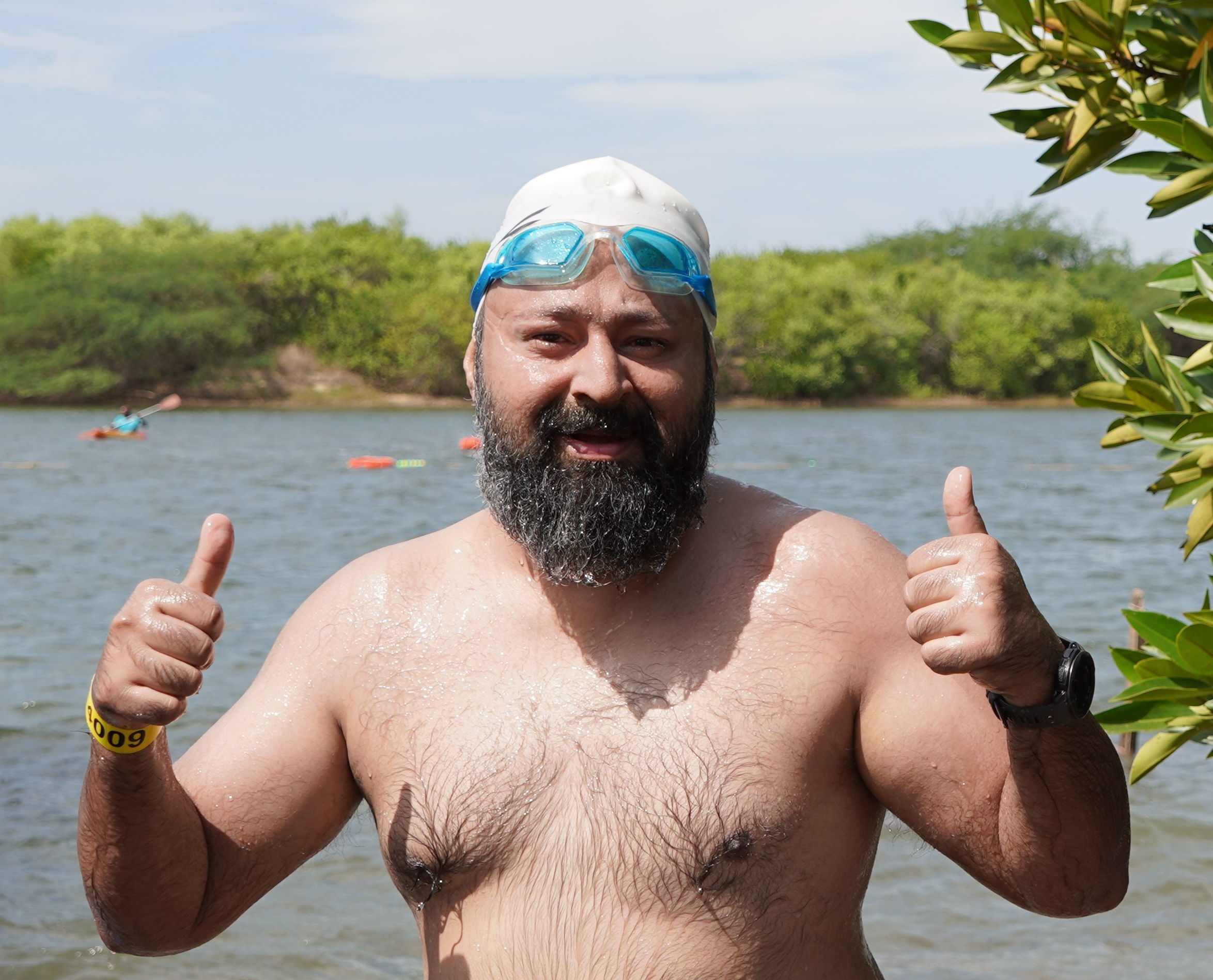
Volunteers handed out medals and water. Other swimmers laughed, comparing stories, comparing salt lines on their arms. I stood in the shallows, breathing, and I have never been more disappointed to leave a body of water.
I wished it went on longer.
Not because it was easy. It was not easy. Because in the disruption, in the constant renegotiation with the water, something had happened that I did not want to leave. The waves had pulled me into a kind of presence so complete that the shore felt less like an arrival and more like an interruption. The rhythm I had lost was replaced by something else: a responsiveness, a wakefulness, a way of being in the water that required all of me, my stroke count and my breath cadence and my attention and my patience and my willingness to keep adjusting. The difficulties were not obstacles I had to overcome before the healing could happen. They were how the healing happened.
What stays
The pool restores proportion. I wrote something like that about a different kind of swim. You climb out and the world has shrunk back to a manageable scale. Your problems are still there, but they have receded to a distance where you can look at them instead of being inside them.
The ocean does not restore proportion. It establishes it.
In the pool, you are the same size as your problems and the water helps you shrink them. The ocean reminds you that the world was never the size you thought it was. The tide that broke your rhythm was set in motion by forces you cannot see. It has been turning for billions of years. It will turn for billions more. And you, in the middle of it, learning to breathe around a wave, you are part of something much larger than your unquiet mind.
The water does not tell you this. It shows you. It puts you in the middle of a force that has been moving since long before humans existed and lets you feel how small you are. That smallness is not a diminishment. It is a kind of release. Your problems do not shrink because the water removes them. They shrink because you finally see them next to something bigger.
That is a different kind of healing. Not the quieting of the anxious self. The expansion of the self into something that includes the anxiety, the wave, the salt, the tide, and still keeps moving.
The waves come from directions you did not expect. The rhythm breaks. The thing you were counting on, the calm water and the steady stroke and the quiet mind, is not there, and you have to find your way through anyway. This is not a lesson you learn once and file away. It is a capacity you rebuild every time you enter the water. The water does not give you answers. It gives you practice.
And practice is how healing works. Not in one revelation. In the repetition of showing up, of being disrupted, of finding your way back to the breath. You learn to breathe through the wave so that when the wave comes in life, and it will, you already know what to do. Not because you thought about it. Because you have done it before.
The water holds what you carry. It has been holding it longer than you have. It will still be holding it when you are gone. And for the length of a 4k swim, if you let it, it will hold it for you, not by calming the water but by teaching you to breathe through what comes.
That is how the water holds. That is enough.